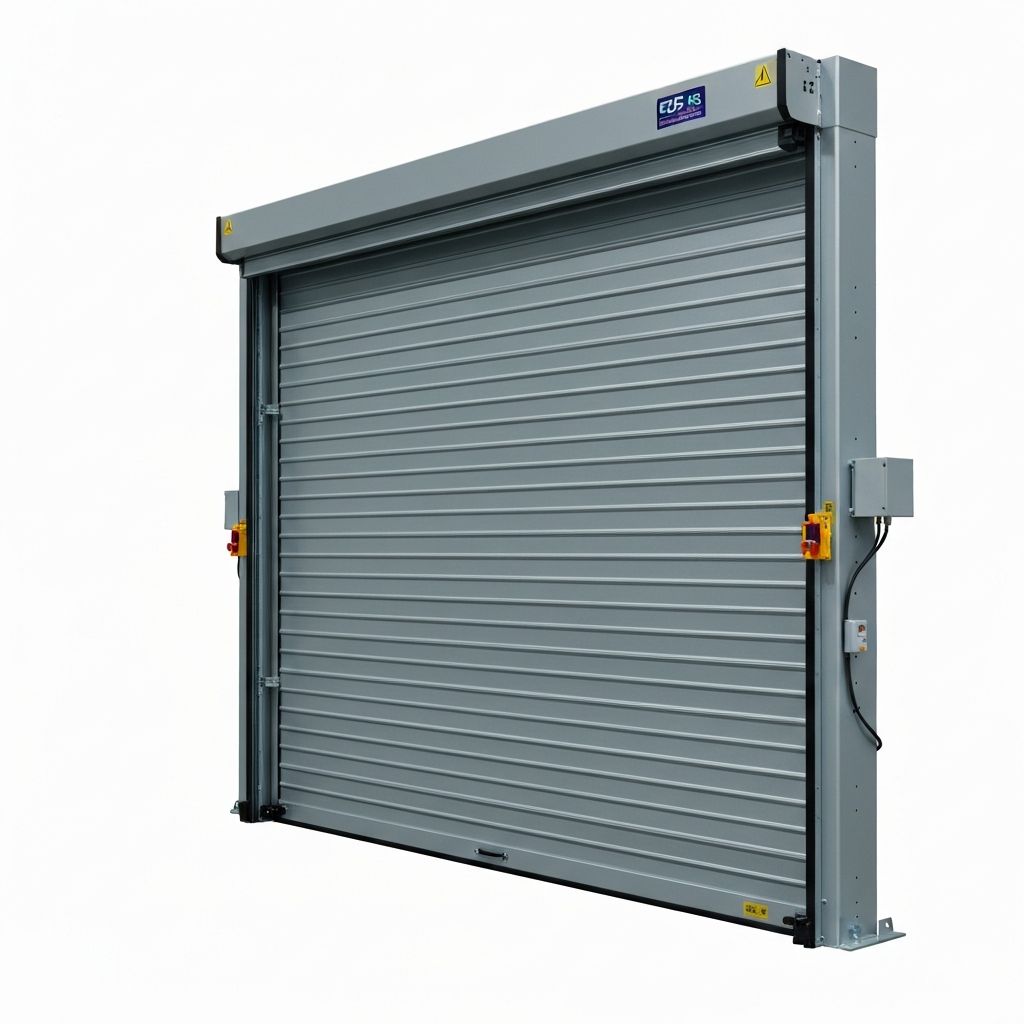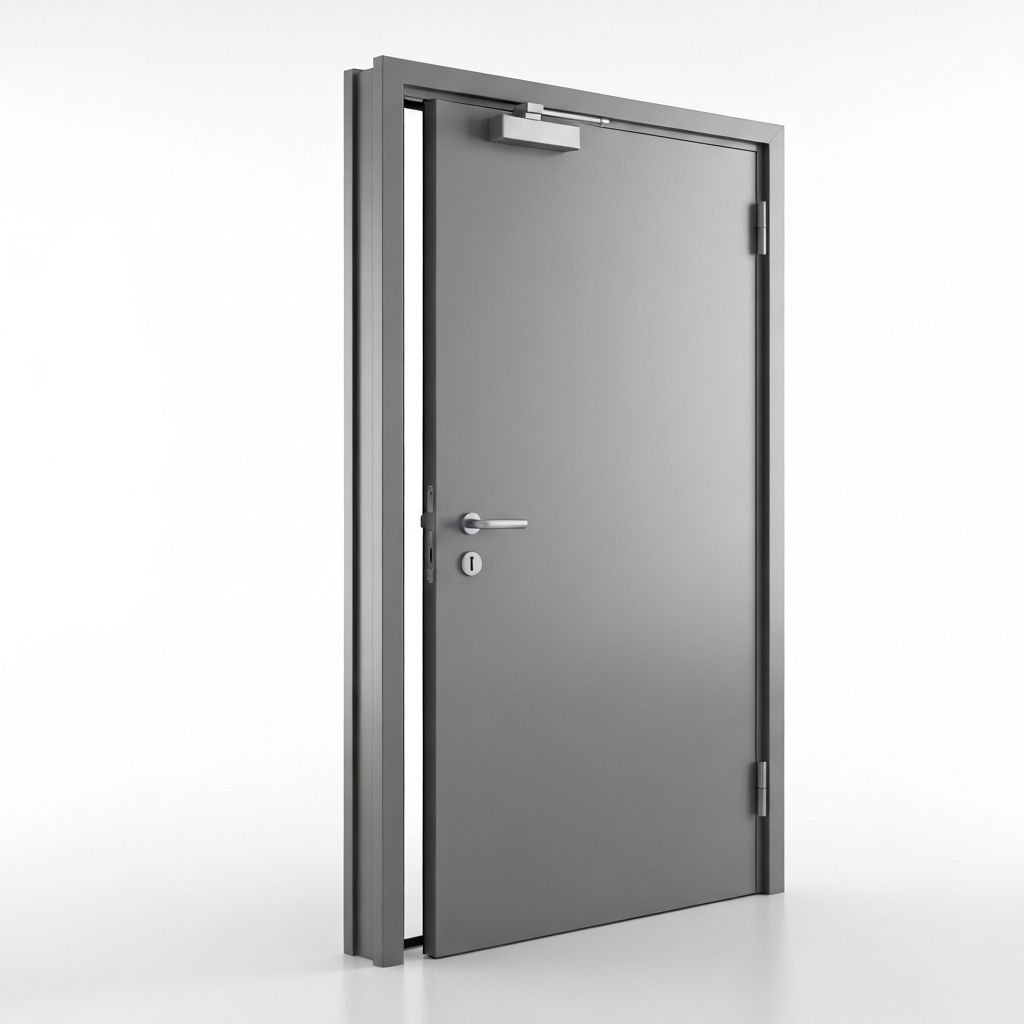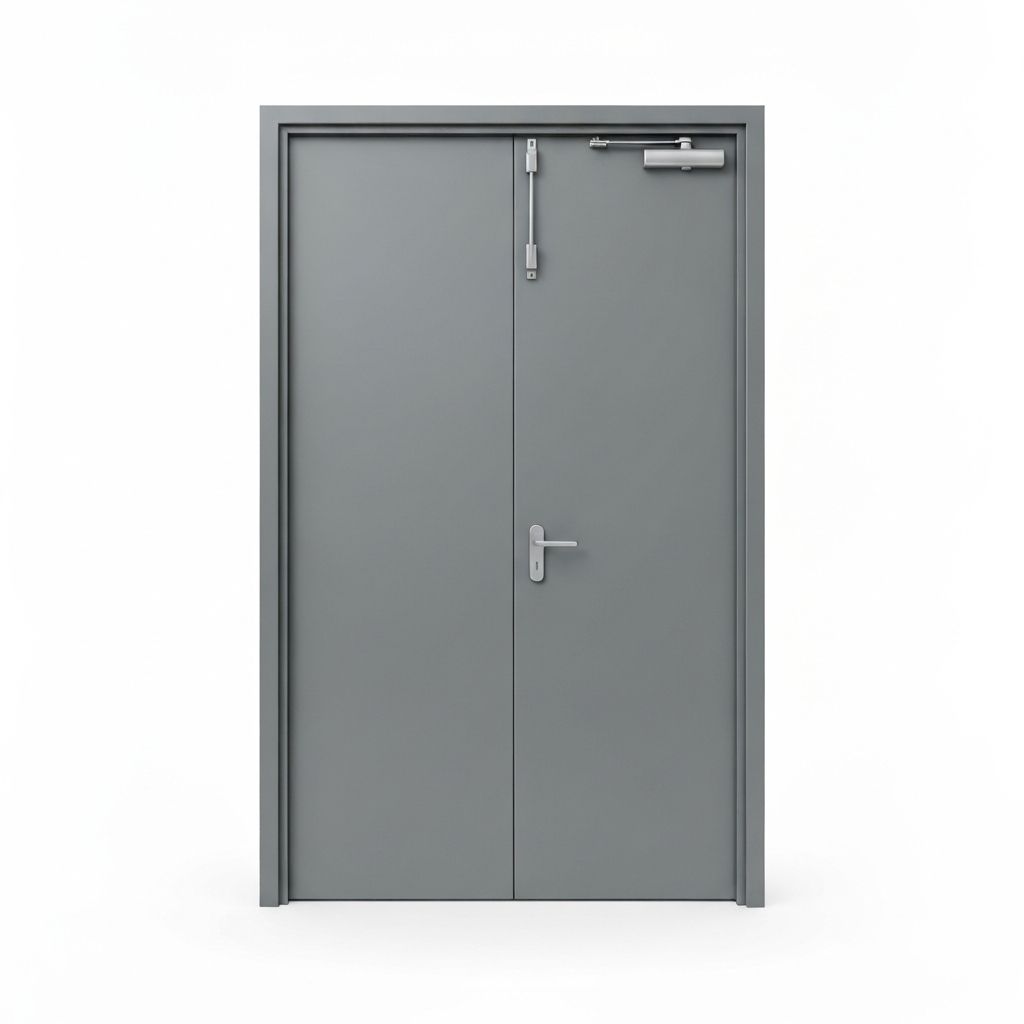
1. The Misunderstanding That Costs Building Owners Every Year
Walk through most commercial buildings under construction and you will see the assumption play out in real time. Spec sheets call for "90-minute fire-rated doors at stairwell enclosures" and the material decision gets deferred to cost. Steel goes to the utility stairwells. Wood gets booked for the tenant-facing corridors.
The assumption is the rating does the heavy lifting and the material is largely an aesthetic choice.
That assumption turns expensive.
The global fire door market was valued at roughly USD 11.2 billion in 2024 and is projected to reach approximately USD 17.3 billion by 2031, growing at a CAGR of around 4.01%. Steel fire doors alone account for nearly 48% of all fire door installations globally, driven largely by commercial building safety regulations.
Yet a surprising number of project specifications still treat the steel fire door vs. wood fire door decision as interchangeable, as long as the minute-rating matches.
It is not interchangeable. The material controls how the door fails, how long it survives in service, and what it costs over a 15–20 year lifecycle.
2. Fire Performance: What the Rating Label Doesn't Tell You
How the Two Materials Behave Differently Under Actual Fire Exposure
Both steel fire doors and wood fire doors are tested to the same furnace standards: UL 10C in North America, EN 1634-1 in Europe, BS 476 Part 22 in the UK. These test protocols measure two critical parameters:
- Integrity: Does the door hold together and prevent flame passage?
- Insulation: How hot does the unexposed face get?
But the way the two materials pass tells different stories.
Steel is non-combustible. It does not ignite, does not contribute fuel to the fire, and the structural failure mode is predictable: the steel skin heats, distorts, and eventually the core insulation degrades. The door remains physically in place, resisting flame penetration, often beyond its rated duration in real-world fire events.
Wood is inherently combustible—even engineered hardwood treated with fire retardants. Under sustained fire exposure, wood undergoes pyrolysis. The char layer that forms does slow further degradation, and fire-retardant treatments reduce flame spread materially. But the door assembly is losing mass and structural section continuously.
Fire Performance Comparison
| Aspect | Steel Fire Door | Wood Fire Door |
|---|---|---|
| Material Combustibility | Non-combustible | Combustible (treated with fire retardants) |
| Maximum Fire Rating | Up to 180 minutes | Up to 90 minutes (some engineered cores reach 120) |
| Failure Mode Under Fire | Gradual distortion; remains in place | Continuous pyrolysis; char formation; mass loss |
| Contribution to Fire Load | None | Adds fuel load (reduced by retardant treatment) |
| Integrity After Multiple Inspections | Stable | Degrades if moisture or wear compromises core |
3. Structural Integrity and Durability: The 10-Year Difference
Moisture, Warping, and Daily Abuse
This is where the steel fire door vs. wood fire door comparison tilts sharply in one direction for many commercial applications.
Steel doors resist warping, cracking, and corrosion when properly finished. They withstand years of weather exposure and adversarial conditions without losing their fire-rated integrity.
Wood doors, by contrast, are susceptible to:
- Moisture absorption
- Warping and swelling in humid conditions
- Termite damage in certain climates
In a controlled interior environment—a dry, climate-controlled office corridor—these vulnerabilities may never materialize. In a basement stairwell, a coastal hotel, or an unheated industrial space, they surface within years.
A wood fire door that has warped slightly may still latch. But if the gap between door and frame exceeds 1/8 inch (the typical maximum under NFPA 80 for most doors), the door fails its annual inspection—not because the fire rating expired, but because the physical condition compromised the assembly.
Expected Service Life
| Material | Typical Service Life | Maintenance Required |
|---|---|---|
| Steel Fire Door | 30+ years | Low (periodic inspection, occasional touch-up painting) |
| Wood Fire Door | 10–15 years | Higher (periodic sealing, refinishing, hinge adjustment) |
4. Aesthetics and Finish Options: The Design Reality
The aesthetic argument in the steel fire door vs. wood fire door debate has shifted meaningfully over the past decade.
Wood fire doors retain a natural advantage in warmth and traditional appearance. For hotels, heritage restorations, and high-end residential lobbies, the tactile quality of real wood veneer remains difficult to replicate fully.
Steel fire doors have largely closed the aesthetic gap:
- Powder coating in virtually any RAL color
- Wood-grain embossed finishes
- Stainless steel skins for cleanroom and pharmaceutical applications
- Custom glazing options with fire-rated vision panels
A modern steel fire door can present a finish indistinguishable from a wood door at typical viewing distance—while delivering the structural and fire-resistance advantages of steel.
5. Where Each Material Fits: Application-Specific Selection
The decision framework that experienced fire door manufacturers and specifiers use is not about which material is "better"—it is about which material fits the application:
| Application | Recommended Material | Primary Reason |
|---|---|---|
| Stairwell enclosures (high-rise) | Steel | High fire rating, durability, code compliance consistency |
| Hotel guest floor corridors | Wood | Aesthetic warmth, 60-min rating adequate |
| Boiler rooms, plant rooms | Steel | 120+ min fire rating required; structural integrity |
| Office interior corridors | Either | Code-dependent; aesthetics often decide |
| External fire exit doors | Steel | Weather resistance, security, fire integrity |
| Heritage building interiors | Wood | Aesthetic continuity, regulatory acceptance |
| Cleanrooms, pharmaceutical facilities | Steel (stainless) | Non-porous surface, cleanability, chemical resistance |
6. Total Ownership Cost: The Purchase Price Trap
A basic 60-minute wood fire door typically carries a lower unit purchase price than an equivalent steel fire door. For budgetary purposes:
| Door Type | Unit Price Range |
|---|---|
| Basic 60-minute rated | US$400–$700 |
| 90-minute or specialty | US$600–$1,200+ |
Steel generally falls at the higher end of those bands for equivalent ratings.
However, the unit purchase price tells less than half the story.
Steel fire doors have a higher upfront price tag. Yet factor in a service life often twice that of wood and minimal upkeep, the total cost of ownership over a 20-year projection tilts in favor of steel for most commercial applications.
| Cost Element | Steel Fire Door | Wood Fire Door |
|---|---|---|
| Unit Purchase Price (60-min) | US$500–$700 | US$400–$600 |
| Typical Service Life | 30+ years | 10–15 years |
| Annual Maintenance | Low | Higher |
| Replacement Cycles (20 years) | 0–1 replacement | 1–2 replacements |
| Total Cost of Ownership (20 years) | Lower due to longevity | Higher due to replacement frequency |
7. What to Ask Your Fire Door Manufacturer Before You Specify
If you are sourcing fire doors for a commercial or industrial project, the quality of your specification depends on the questions you ask upfront:
-
Does the door assembly carry full third-party certification (UL, WHI, or equivalent) for the rated duration, and can you provide the listing reference?
-
For steel fire doors: What gauge steel is used for the door skin and frame? Standard commercial-grade fire doors typically use door skins from 18 to 20 gauge (approximately 1.0–1.5 mm) with frames from 14 to 16 gauge.
-
For wood fire doors: What core construction material and fire-retardant treatment are used? How does the core perform under sustained humidity exposure?
-
What hardware compatibility is required? Confirm that specified hinges, closers, and latching hardware carry matching fire ratings and are listed for use with the specific door assembly.
-
What is the manufacturer's documented maintenance protocol, and does the warranty period align with the expected service life in your operating environment?
Conclusion
The steel fire door vs. wood fire door decision ultimately resolves around a simple prioritization:
-
If your project values maximum fire protection, minimal maintenance, and long service life above initial cost, steel is the default choice for most commercial and industrial locations.
-
If your project values aesthetic warmth, interior design continuity, and lower upfront investment for controlled-environment applications, wood fire doors meet code with proven performance.
The mistake is not choosing one over the other. The mistake is choosing without understanding what the material difference means over a 20-year ownership horizon.